
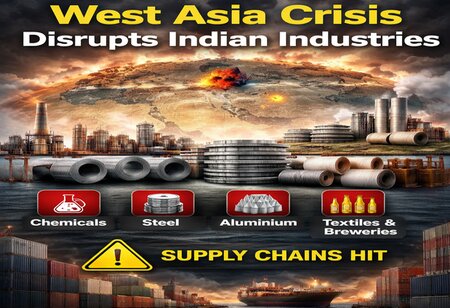
The escalating conflict in West Asia is sending shockwaves through India’s manufacturing sector, disrupting industries ranging from steel and aluminium to textiles and alcoholic beverages- while impacting supply chains. Rising freight rates, gas shortages, payment bottlenecks, and delayed shipments are beginning to impact production and costs across sectors.
Key Highlights
- West Asia crisis disrupts chemicals, metals and textiles, raising costs and hitting industrial production.
- Supply shortages of LNG, sulphur and inputs strain Indian industries and increase inflation risks.
A major trigger behind these disruptions is the effective closure of the Strait of Hormuz, a critical global trade route. This has led to cargo getting stuck at multiple points in the supply chain, creating uncertainty and forcing companies to reassess production schedules.
A Mumbai-based textile company revealed it is down to just 30 days of raw material stock, with key imports such as flax from Europe delayed. One consignment has reportedly been stranded at Jebel Ali port for over 20 days, while others in transit risk further disruption, potentially leading to production halts.
The crisis is extending beyond energy into raw material supply chains. Nearly 35% of globally traded sulphur originates from West Asia, and prices have surged by 80% year-on-year, affecting sulphuric acid and phosphoric acid production. This, in turn, is expected to push up fertiliser prices such as DAP and MAP ahead of the crucial Kharif sowing season, posing risks to food security.
In the metals sector, gas shortages have forced at least one major aluminium producer to halt extruded product output. Industry bodies warn that nearly 90% of the 250 aluminium extrusion units (mostly MSMEs) face financial stress due to LPG and PNG shortages.
Also Read: India Imports Iran LPG After 4 Years as US Eases Sanctions Amid Crisis
The brewing industry is also under pressure, with glass bottle prices rising 20%, packaging costs up nearly 100%, input material costs increasing 20–25%, and logistics costs climbing 10%. A 3% depreciation in the rupee has further inflated import bills, pushing overall costs higher by 12–15%.
With LNG shortages affecting glass and packaging manufacturers and supply chains tightening, experts warn that prolonged disruption could lead to production cuts, rising inflation, and broader economic implications for India.