
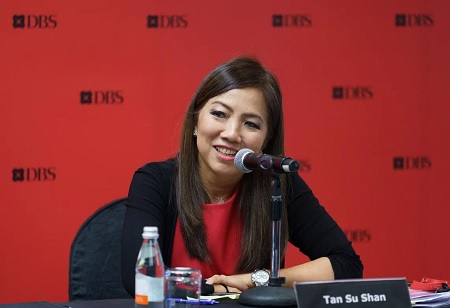
DBS Bank CEO Tan Su Shan sees India as a potential global AI winner, citing its software talent, young population, and digital infrastructure. However, she said the country must strengthen its hardware and precision-engineering capabilities to compete in the artificial intelligence sector.
Tan shared her views during a meeting with Finance Minister Nirmala Sitharaman in Singapore on Saturday. She also expressed confidence in India's economic growth, expanding middle class, and consumption potential. According to Tan, India needs to communicate these strengths more effectively to global investors.
“There are not many big countries left in the world with GDP growth of over 7%,” she said, highlighting India's economic prospects.
Key Highlights
- DBS CEO Tan Su Shan sees India as a potential global AI winner but stresses the need for stronger hardware capabilities.
- Indian banks mobilized $133 billion through FCNR(B) deposits, reflecting overseas confidence in Indian credit.
- Higher foreign direct investment (FDI) and exports could help support the rupee amid foreign capital outflows.
Why Does India Need Hardware Capabilities to Become a Global AI Winner?
Tan believes India's software talent, demographics, and digital infrastructure provide a strong foundation for artificial intelligence. However, she emphasized that the country must combine these strengths with hardware manufacturing and precision engineering.
“You've got the power, you've got the people. You need to now combine some hardware, upstream hardware, with the downstream software,” she said.
According to Tan, Asian economies have complementary capabilities that could support a stronger regional technology ecosystem. India could contribute its software expertise and digital public infrastructure while developing capabilities in hardware and other parts of the technology supply chain.
She also highlighted the role of India Stack, the Goods and Services Tax (GST), and the Unified Payments Interface (UPI) in building a data-rich ecosystem. These systems have helped financial institutions assess creditworthiness more effectively.
Tan cited DBS's Indian small and medium enterprise (SME) loan portfolio during the COVID-19 pandemic. She said the bank's Indian portfolio performed the best because it had access to good data. She added that India's digital advantages remain insufficiently understood by global investors, despite the country's progress in technology and financial infrastructure.
Also Read: For India's Deepening Capital Pool, Discipline Must Keep Pace
Can FDI and Exports Help Support the Indian Rupee?
Alongside her optimism about India's AI prospects, Tan addressed concerns about capital outflows and pressure on the rupee, which was trading near historic lows.
She pointed to strong demand for foreign currency non-resident bank deposits (FCNR(B)) as evidence of overseas confidence in India. Indian banks mobilized $133 billion under the scheme, while foreign investors net sold $7.76 billion worth of Indian equities over the previous two months. These outflows added pressure on the rupee, prompting the Reserve Bank of India (RBI) to announce measures to curb volatility.
“The success of the FCNR deposits really spoke to everyone,” Tan said, adding that the deposits reflected confidence in Indian credit and the country's ability to attract overseas savings through suitable structures and incentives.
However, she stressed that India needs more durable capital inflows to support currency stability. Attracting higher foreign direct investment and increasing exports would help balance capital flows, she said. “We've got to figure out a way to keep the rupee stable,” Tan said, pointing to FDI and exports as two important priorities.
Tan also highlighted Singapore's potential role in channeling investments between North and South Asia. She described India as a strong economic opportunity, citing its growth, consumption, expanding middle class, and digital infrastructure.
Her remarks underline the importance of building hardware capabilities, attracting long-term investment, and expanding exports as India seeks to strengthen its position in the global AI economy.