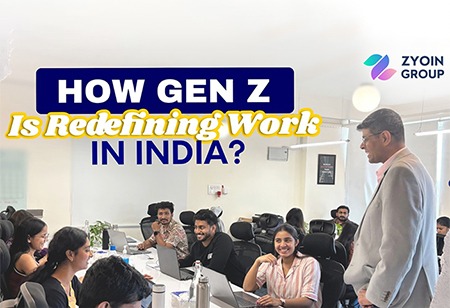
Something has shifted quietly but decisively in how India's youngest professionals think about work and money. For previous generations, a stable job with a single employer was the definition of financial security. Today, we will unravel how Gen Z is redefining work in India. Traditional career progression meant climbing one ladder, staying loyal to one organisation, and building savings through one salary. And with the rise of parallel careers, Gen Z, the cohort entering the workforce today, is operating from an entirely different playbook.
They are not just working jobs. They are building portfolios.
One Salary Is No Longer the Plan
The idea of depending on a single income stream makes Gen Z visibly uncomfortable, and the reasons are not difficult to understand. They entered adulthood during a period of economic uncertainty, watched industries get disrupted overnight, and came of age in an environment where digital platforms made it genuinely possible to earn from multiple sources simultaneously. The result is a generation that treats their primary job as one income stream among several, not the only one.
A software engineer at a GCC might freelance for international clients on weekends. A finance professional might run a personal investing content channel. A product manager might consult for early-stage startups on the side. These are not exceptions. Across India's metropolitan and Tier-2 cities, this pattern is becoming the norm.
The Gig Economy as Infrastructure
What has made parallel careers structurally viable is the maturity of India's gig economy. Platforms across creative services, technology, consulting, content, and financial advisory have made it relatively straightforward for skilled professionals to monetise expertise outside their primary employment.
India currently has one of the largest and fastest-growing gig workforces globally. For Gen Z professionals, these platforms are not fallback options. They are deliberate financial tools, used to diversify income, build reputation, and in many cases, test the viability of ideas they eventually want to pursue full time.
The distinction matters. Earlier generations may have taken on extra work out of necessity. Gen Z is doing it by design.
Financial Planning Has Changed Shape
The financial priorities of Gen Z professionals reflect this shift. Unlike earlier cohorts who prioritised provident funds, fixed deposits, and long-term insurance products as primary wealth instruments, Gen Z is approaching wealth creation with considerably more sophistication and impatience.
Mutual fund SIPs, direct equity investing, digital gold, real estate investment trusts, and even alternative assets are all part of conversations happening among professionals in their mid-twenties. Financial literacy content on digital platforms has accelerated this shift, giving young professionals access to investment knowledge that previous generations had to seek out actively.
Parallel career income plays a direct role here. Secondary earnings are frequently channeled into investment portfolios rather than lifestyle spending, creating wealth-building habits at an earlier stage than most previous generations managed.
What This Means for Employers and Hiring
From a talent and workforce perspective, the rise of parallel careers is creating new dynamics that organisations cannot afford to ignore.
Gen Z professionals evaluate employers differently. Beyond compensation, they are assessing flexibility, the scope for skill development, and whether a role allows them space to pursue other interests. Rigid structures, micromanagement, and cultures that demand total professional identity are increasingly unattractive to this cohort.
At Zyoin Group, this shift is visible in hiring conversations across sectors. Candidates are asking different questions, prioritising growth trajectory and autonomy over titles, and making decisions with a longer-term view of their overall career portfolio rather than just the immediate role. Organisations that understand this dynamic are designing roles and cultures accordingly, while those that do not are finding retention increasingly difficult.
The Risk Side of Parallel Careers
It would be incomplete to discuss this trend without acknowledging its risks. Managing multiple income streams alongside a full-time role requires strong personal financial discipline, clarity on tax obligations, and the ability to manage time and energy across commitments.
Gen Z professionals are also navigating a landscape where not all secondary income is stable. Freelance work can be inconsistent, content monetisation takes time to build, and consulting income can dry up quickly during economic slowdowns.
The ones who manage parallel careers successfully tend to treat them with the same rigour they apply to their primary work. They track income, manage expenses, invest consistently, and build financial buffers rather than assuming secondary income will always flow.
A New Definition of Financial Security
What Gen Z is ultimately building is a different version of financial security, one based on diversification rather than dependence. Instead of relying on a single employer or income source, they are constructing financial lives with multiple layers, each contributing to stability and long-term wealth creation. This is not a rejection of ambition or commitment. It is a more sophisticated understanding of risk in a world where no single career path is guaranteed.
For India's broader economy, this generation's approach to work and wealth could have significant long-term implications, creating a more entrepreneurial, financially literate, and economically resilient workforce than the country has seen before.
The ladder has not disappeared. Gen Z has simply decided to climb several at once.