
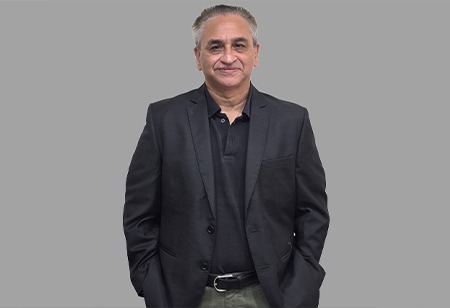
In an interaction with Adlin Pertishya Jebaraj, Correspondent at Finance Outlook, Rajesh Damani, Founder and Managing Director, Jamshri Realty Limited, points out how the decentralization of workforces, increasing incomes with less spending and the effect of digital connectivity are enhancing the growth of Tier 2 and 3 cities as re-emerging economic centers. His emphasizes, diversified local economies, yield to cost ratios and governance track records are important to investors who consider such markets.
Rajesh Damani is a highly experienced, real estate and urban development professional who has served more than 30 years in the top management of integrated development of the emerging regional markets. His experience runs in strategic investment analysis, network-based urban growth and novel financial models of regional development.
What are the most significant economic and demographic trends that are currently shaping the urban landscape of Tier 2 and 3 cities?
The main factor is the decentralization of the workforce, which started in the wave of the COVID reverse migration as the only choice to work. With such evidence of concept, as of nowadays numerous professionals are returning to smaller cities so that they could experience higher quality of life and reduced living expenses.
This change is upheld by better online connectivity and emergence of a remote work environment. These cities are emerging as new consumption centers in terms of economics. The rise in the disposable income in these areas is attracting national retail brands and healthcare providers of modernity. Government efforts to modernize basic infrastructure also have a strong impetus such as the Smart Cities Mission.
Also Read: How Advancements in AI Will Topple the Indian IT Services Market?
From a financial perspective, what are the key factors that investors should consider when looking to invest in Tier 2 and 3 cities?
The investors should pay close attention to the development of the local GDP and the economy diversification. A city which is dependent on one industry is more risky than a city with an amalgamation of manufacturing and services.
The ratio of the yield-to-cost is also essential to consider. These cities have fewer entry costs although the time taken by an investment to mature might be high. The history of local government in undertaking and providing sanction on the execution of government projects should also be looked into.
Given the higher risk profiles of Tier 2 and 3 cities, how do financial institutions assess the feasibility of large-scale infrastructure projects in these areas?
Lenders are concerned with the predictability of cash flows. They usually need greater debt service coverage ratios that cushions against slower adoption than expected.
Reliable anchor projects are also sought by institutions in collaboration with brands that are synonymous with transparent value delivery of choices such as the Tata Group, or state-supported guarantees that reduce the risk of low demand. The areas of physical due diligence are more stringent. This makes the acquisition of the land titles easy and the surrounding environmental regulations are well addressed.
Also Read: How India's Startup Capital Mindset Is Rapidly Evolving
What financing mechanisms are being used to support the infrastructure and economic development of smaller cities?
Large developments continue to rely on Public- Private Partnerships. Municipal bonds are also picking up as the cities seek to raise capital at the market itself.
Other than conventional bank loans, Real Estate Investment Trusts are being used to liquidate completed assets by many developers. The gap in viability of certain utilities belonging to the private players is often funded by central government grants that are given to make such utilities profitable.
What is your long-term vision for Tier 2 and 3 cities in India? How do you foresee their role evolving within the broader economic landscape of the country?
Such metropolises will probably be the main resolutions of the Indian middle-class development. They will be transformed into independent economic entities. This shift will ease the untenable load on Tier 1 metros. These cities will ultimately set the pace of clean living in the long run, with the incorporation of modern technology and more spacious and affordable urban development.