
4. Digital Arrest Scams in India: How They Work and How to Stay Safe
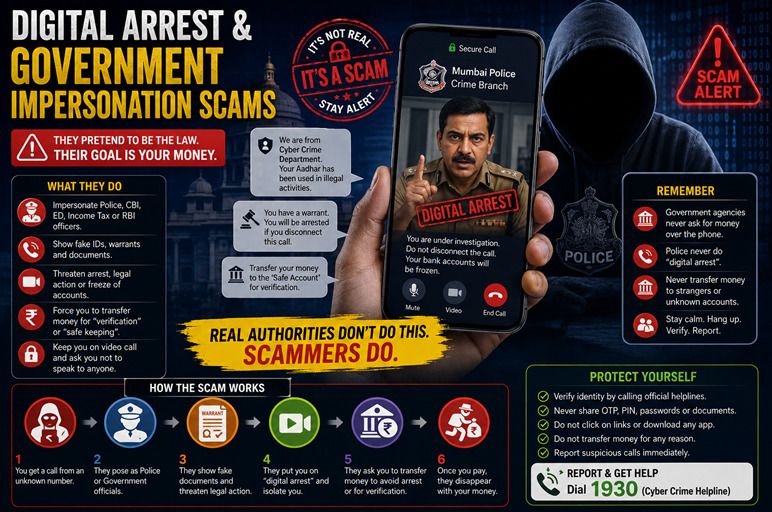
● The Real Scenario: A working professional or senior citizen receives a call from someone claiming to be a FedEx/BlueDart official, stating a courier sent by them to Taiwan contains illegal narcotics and passports.
● How It Works: The call is quickly transferred to fake "CBI or Narcotics Bureau" officers on Skype wearing real uniforms. They place the victim under a fake "digital arrest," ordering them to keep their video camera on for hours, cut off communication with family, and transfer their savings to a "government clearance account" for verification.
● How to Avoid: Remember that Indian law enforcement never conducts arrests or investigations via Skype or WhatsApp video calls, nor do they ever ask for money to prove innocence.
What Financial Industry Experts Recommend
Cybersecurity law and data protection expert Dr. Prashant Mali addressed digital arrest and government impersonation scams, stating: "Digital arrest scams do not attack your bank account first; they attack your mind. They weaponise fear, authority, urgency, and social stigma in a single phone call, making even educated professionals panic and comply."
The Scale of the Digital Arrest Epidemic (2026 Data)
● Supreme Court Intervention: In August 2026, the Supreme Court issued a landmark directive ordering the Central Bureau of Investigation (CBI) to spearhead a massive, coordinated nationwide crackdown. Digital arrest extortion is now treated as an organized national security and economic risk, rather than an isolated consumer fraud issue.
● Dropping Volume, Increasing Value: Systemic tracking via the National Cybercrime Reporting Portal (NCRP) indicates a sharp decline in total reported case volumes—dropping from 123,672 cases in 2024 to 58,239 in 2025, and down to 16,377 complaints recorded up to June 30, 2026. However, the court explicitly warned that the financial damage per incident remains high, making continued institutional vigilance vital.
● Severe Multi-Crore Extortions: A single recent investigation led by the CBI uncovered a multi-state ring targeting 238 victims, siphoning ₹80 crore across a sprawling network of 67 first-layer mule accounts. Individual targets are regularly coerced into parting with amounts ranging from ₹10 Lakhs to single high-net-worth scams exceeding ₹20 Crores.
● The Psychological Hold: The physical and emotional trauma is increasing. In documented profiles tracked by Moody's Analytics, victims—frequently senior citizens or working professionals—have been kept as "digital prisoners" in their own homes for over 50 days under continuous camera surveillance before their accounts were totally drained.