
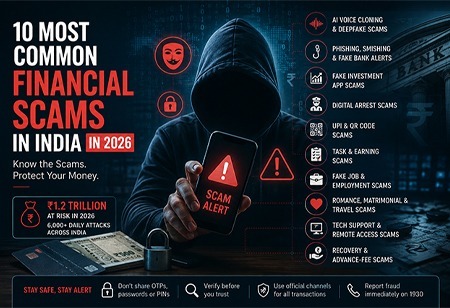
5. UPI, QR Code & Payment Scams
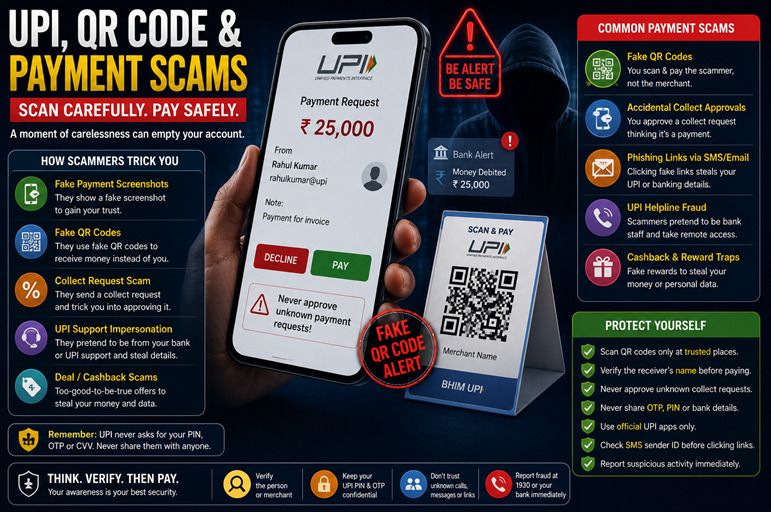
● The Real Scenario: A shopkeeper or ordinary citizen suddenly receives a UPI notification that ₹5,000 has been credited to their Google Pay or PhonePe account out of nowhere.
● How It Works: A caller quickly rings up crying that they sent money to the wrong number by accident and begs for it back. If the victim returns the money via a new transaction, they later find out the original money was sent from a stolen bank account, making the victim an accomplice to money laundering and locking their entire bank account.
● How to Avoid: Do not send the money back yourself. Tell the caller to contact their own bank to initiate a standard reversal, or visit your bank branch to safely route the money back through legal channels.
What Financial Industry Experts Recommend
Paige Paridon, Senior Vice President and Associate General Counsel of Regulatory Affairs at the Bank Policy Institute, addressed the rigidity and risks of these real-time platforms, advising that "funds sent through P2P platforms should be thought of as cash" because recovering money from a mistake or scam is exceptionally difficult.
The Scale of P2P Transfer Fraud (2026 Data)
UPI's enormous scale has also created a large attack surface for payment fraud. NPCI data shows that UPI processed 22.72 billion transactions worth ₹28.92 lakh crore in June 2026 alone. At the telecom layer, the Department of Telecommunications said that 50.90 lakh mobile connections had been disconnected as of July 15, 2026, based on analysis of 11.18 lakh suspected-fraud communication reports submitted through Chakshu.
● The Account Lock Epidemic: P2P accidental money transfer cons are the leading cause of "mule-by-association" bank account freezes in India. Thousands of savings accounts are locked every month by state cyber cells investigating larger financial crimes.
● The Lien Chain Reaction: When a victim returns the money via a fresh transaction, they do not realize the original incoming cash was "tainted" (stolen via phishing or investment scams). Once the actual cybercrime victim files a complaint in 1930, the entire trail of funds is flagged, causing banks to automatically place a total debit freeze (lien) on the innocent recipient's account.
● Average Trap Amount: Fraudsters typically use amounts ranging between Rs 2,000 to Rs 15,000 for these scams. This lower range is chosen deliberately because it is small enough to avoid triggering automatic bank fraud alerts, yet large enough for the caller to create a convincing, high-distress scenario.
● High Collateral Damage: Innocent citizens frequently lose access to their primary salary or business accounts for 30 to 90 days while trying to prove to cyber cells that they were not part of the original cyber fraud syndicate.