
Industrial businesses can no longer afford to treat equipment reliability as a maintenance concern when every hour of downtime affects cost and output.
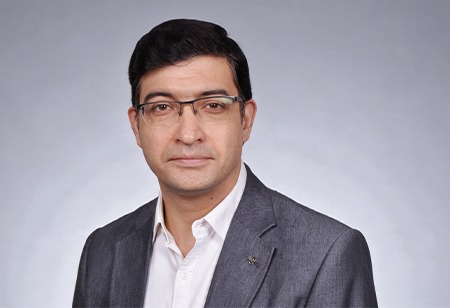
In a candid conversation with Thiruamuthan, Correspondent at Finance Outlook India magazine, Ramneek Teng, CEO, Engineering Services, Bluspring Enterprises Limited, shares his perspective on the changing role of asset reliability across India’s industrial sector.
Drawing on over 25 years of experience across manufacturing, infrastructure, power, renewables, and T&D, he discusses predictive maintenance, AI, IoT, asset lifecycle management, and extending the life of existing equipment. He also explores how stronger collaboration and integrated asset management can improve safety, productivity, cost efficiency, and operational continuity.
Below are his key excerpts from the interaction.
What is the current state of asset reliability in India’s industrial sector, and how are rising production demands and cost pressures changing the way companies manage equipment?
We are seeing a fundamental shift in how the industry looks at asset reliability. Earlier, maintenance was often treated as a support function: you serviced equipment at prescribed intervals and responded when something failed. That approach is becoming increasingly difficult to sustain.
Plants today are expected to deliver higher output, often from the same asset base, while keeping costs under control. In such an environment, every hour of unplanned downtime matters. Across asset-heavy sectors - metals, cement, power, ports and chemicals, reliability is no longer measured only by repair speed; it is being measured by availability, lifecycle cost and risk.
Companies are therefore looking beyond maintenance schedules to understand how an asset is actually performing, what is likely to fail and when intervention is required. This is particularly visible in the large, multi-year O&M contracts being awarded in power and metals today, where uptime and safety KPIs directly determine commercial outcomes. Reliability is becoming a business conversation because it directly influences productivity, cost, safety and continuity of operations.
I do not believe digitalization should automatically lead to replacement. Some of the biggest opportunities are in making existing assets perform better
As industries focus on cost efficiency, how can better asset reliability help reduce downtime, production losses, and premature equipment replacement?
One mistake is to equate cost efficiency with spending less on maintenance. In my experience, the cost of not maintaining an asset at the right time can be considerably higher.
A failure does not only mean a repair bill. It can mean lost production, idle manpower, disrupted schedules and, in some cases, safety or quality implications. In asset-heavy industries, cascading production losses from a single unplanned shutdown often far exceed the maintenance spend that could have prevented it. Reliability helps you intervene before you reach that point.
It also changes how you look at asset life. Through root-cause elimination, lifecycle planning and condition-based interventions, companies can defer premature equipment replacement and align capex with actual asset health rather than assumed timelines. If you understand the condition and performance of equipment, you can make a much more informed decision on whether to maintain, refurbish, upgrade or replace it. At Hofincons, we approach engineering asset management as a structured discipline to maximize reliability, availability and operational value across the asset lifecycle, not as a maintenance program.
What is driving the shift from traditional maintenance to predictive and condition-based approaches, and what should companies consider when making this transition?
The logic behind predictive maintenance is straightforward; if a failure can be seen developing, there is no reason to wait for the equipment to fail. Technology has made that visibility possible, but the transition is rarely about technology alone.
In my experience, organizations get the best results when they begin with the asset itself, not the tool. Understanding how critical an asset is, how it typically fails, and which parameters signal deterioration is far more valuable than deploying sensors across the board. Predictive maintenance delivers value only when the right data reaches the right people and when teams are prepared to act on it.
Companies making this shift need to focus on three things in parallel. First, data readiness - the right instrumentation, historians and integration with existing maintenance and asset management systems. Second, capability - reliability engineers and data-literate operators who can translate signals into decisions. And third, change management - moving teams from reactive firefighting to planned, predictive workflows.
Simply installing sensors does not make an operation predictive. The real value comes when technology, engineering knowledge and execution work together to enable intervention at exactly the right time.
How are technologies such as IoT, sensors, and predictive analytics changing asset reliability, and where can they create the greatest impact for industrial businesses?
The biggest change is visibility. Earlier, we understood the condition of equipment through periodic inspections or after performance had already started deteriorating. Today, IoT sensors and connected platforms enable continuous monitoring of critical equipment - pumps, compressors, turbines, boilers, conveyors, turning maintenance from periodic to continuous.
That is particularly valuable in high-uptime, high-risk environments like power plants, refineries, metals and ports, where an unexpected failure can stop production or create significant safety and cost implications. With STEAG Energy Services India now part of Bluspring, we also bring deep capability in digital solutions for the power sector - including AI/ML-based boiler leakage monitoring, fleet performance analytics and digital twin platforms used to simulate and forecast asset behavior. These are examples of how predictive analytics can meaningfully improve detection accuracy, reduce false alarms and enhance operational decision-making.
However, I would add one caution: more data does not necessarily mean more reliability. You need to know which signals matter. A hundred dashboards are of little value if nobody knows what action to take. Technology becomes powerful when data is converted into an engineering decision on the shop floor.
As companies invest in new reliability technologies, how can they balance these investments with getting greater value and longer life from existing assets?
I do not believe digitalization should automatically lead to replacement. Some of the biggest opportunities are in making existing assets perform better.
The pragmatic path is a hybrid model - retrofit sensors and analytics on critical existing assets, and use reliability-centered principles to prioritize where technology delivers the highest ROI. The starting point should be understanding the health, criticality and remaining life of the installed asset base. You may find that an older piece of equipment, with the right monitoring and maintenance intervention, can continue operating reliably for several years.
Companies should focus on use cases with clear cost-of-failure metrics - boiler tube leaks, turbine trips, conveyor breakdowns - and integrate new tools with existing systems to avoid siloed pilots that never scale. Technology should help make that decision objectively. It can tell you where refurbishment makes sense, where a digital retrofit can improve visibility and where replacement is genuinely necessary. Ultimately, this is about lifecycle value.
Do you see AI becoming a core part of asset reliability strategies, or will it mainly complement existing maintenance practices? How could this change industrial operations?
AI is moving from being complementary to becoming core to reliability, particularly for pattern recognition, anomaly detection and optimization across large, complex asset fleets. Its immediate value will be in recognizing patterns, identifying anomalies and helping maintenance teams focus attention where the risk is highest. Over time, I expect maintenance planning to become much more dynamic, with interventions increasingly determined by actual asset condition rather than only fixed schedules. A good example is an AI-based boiler leakage monitoring system, which augments conventional acoustic systems with machine learning to improve detection accuracy. That is the direction in which AI will embed itself into standard reliability toolkits.
However, AI will not replace engineering judgment. Industrial equipment operates in a physical environment, and context matters enormously. I see the future as a combination of machine intelligence and human experience – technology identifying what deserves attention, and experienced engineers deciding what needs to be done.
How can equipment manufacturers, technology providers, and industrial operators work together to build more reliable assets and reduce their long-term operating costs?
Reliability improves when we stop treating the asset lifecycle as a series of separate handovers.
The OEM understands how the equipment was designed. The operator knows how it behaves in real-world conditions. The maintenance team understands recurring problems, while technology providers can identify patterns across large volumes of operating data. Greater collaboration is needed around data standards, interoperability and shared reliability KPIs - so that OEM design data, operator performance data and analytics work together rather than in silos.
Joint work on digital twins, failure databases and predictive models can also help shift reliability into design and commissioning, not just operations. As an independent O&M and asset management partner, Bluspring is positioned to work across OEMs and technologies, integrating multi-OEM data and best practices into a unified reliability framework for clients.
How can an integrated infrastructure model like Bluspring help industrial businesses connect asset performance with wider priorities such as safety, compliance, workforce productivity, and operational continuity?
One thing we learn very quickly in operations is that an asset never works in isolation. Its performance depends on the people operating it, the facility around it, safety practices, compliance systems and several supporting functions.
That is where an integrated infrastructure approach becomes relevant. Within Bluspring, our Engineering Asset Management Services capability allows us to look deeply at asset performance while the larger ecosystem provides visibility into other critical aspects of the operating environment.
The advantage is the ability to connect these conversations. For an industrial client, this means one governance framework for uptime, safety, statutory compliance and workforce management - reducing coordination gaps between multiple vendors and improving overall continuity. For the client, the outcome should ultimately be safer, more predictable and more efficient operations.
Looking ahead, how do you foresee asset reliability evolving in India, and what emerging technologies or practices could shape industrial cost efficiency over the next decade?
I believe the next decade will take us from preventive maintenance towards increasingly predictive and, eventually, more prescriptive asset management.
We will see wider adoption of AI-based failure prediction, IIoT sensor networks, cloud and edge predictive analytics and digital twins for simulation and forecasting - particularly in power, metals, cement, ports and chemicals, which are leading this transition today. Yet, the more interesting change will be how reliability data influences business decisions.
Asset health will increasingly inform production planning, energy management, safety, inventory and capital expenditure.
For India, this becomes particularly important as we add industrial capacity while continuing to operate a large installed asset base. The opportunity is not simply to have more technology; it is to run infrastructure more intelligently. Companies that combine strong engineering fundamentals with digital capability and skilled people will derive the greatest value from their assets.
His Personal Leadership Mantra:
I believe in building skills on a continuous basis and advancing technological innovation. As a leader, I always want to go beyond collaboration to becoming a problem solver and listening to the people operating the assets and solving problems every day. My role as a leader is to create clarity, empower people to act and ensure that we never lose sight of safety and execution.
5 Key Pieces of Advice for Emerging Leaders:
- Solve problems, be resilient, and stay curious; experience should never stop you from learning.
- Spend time on the ground and understand how the business really operates.
- Build teams that are comfortable taking ownership.
- Never trade safety or integrity for a short-term result.
- Execution matters. A good idea has value only when it works in the real world.
About the Spokesperson:
Ramneek Teng is a business leader with over 25 years of experience across manufacturing, infrastructure, and power, with expertise spanning operations, maintenance, technology, and asset management. Before joining Bluspring Enterprises, he held leadership roles across telecom, power distribution, renewables, and transmission & distribution at Bharti Enterprises, IndiGrid, Enercon, and Essel Power. His experience across these sectors has shaped his understanding of technology, operational excellence, and efficient asset management. At Bluspring Enterprises, he leads Engineering Services, working with industrial clients to improve asset performance, safety, and operational efficiency across sectors including steel, pharmaceuticals, cement, oil and gas, and solar infrastructure.