
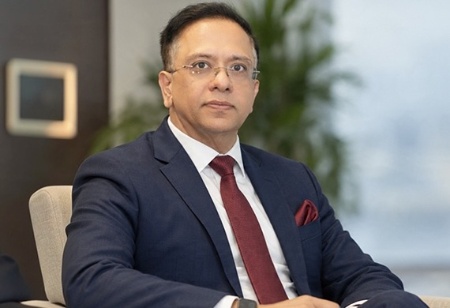
As India’s mature Infrastructure Investment Trusts explore wider public-market participation, Cube Highways Trust’s US$595 million (₹5,000 crore) transition earlier this year provides an important case study. Pankaj Vasani, Group Chief Financial Officer of Cube Highways Trust, discusses the sector's evolution, the demands of public-market readiness, and the implications for infrastructure financing.
India’s Infrastructure Investment Trust (InvIT) market is undergoing a significant structural shift. After years of growth under private institutional ownership, established privately placed InvITs are increasingly looking towards public markets to broaden their investor base, enhance liquidity and access more diversified pools of domestic and international capital.
The shift follows the progressive development of the regulatory framework by the Securities and Exchange Board of India (SEBI), which has provided a pathway for privately placed InvITs to transition into publicly offered structures. An important milestone came in July 2026, when Cube Highways Trust became the first privately listed InvIT in India to complete this transition, through a US$595 million (₹5,000 crore) public offering.
The transaction established an important precedent for the sector, demonstrating the feasibility of taking an established, privately listed infrastructure investment platform to public markets at scale. As other mature infrastructure trusts evaluate similar opportunities, the discussion is moving beyond the mechanics of conversion to a more fundamental question: what does it take to build an infrastructure investment institution capable of meeting the expectations of public-market investors?
For Pankaj Vasani, Group Chief Financial Officer of Cube Highways Trust, the development represents a natural progression in the evolution of India’s infrastructure financing ecosystem.
“Private InvITs have demonstrated that they can aggregate high-quality infrastructure assets, establish institutional governance and generate relatively predictable cash flows. The next stage is about broadening participation and creating greater liquidity. India’s domestic insurance, pension and mutual fund sectors have become increasingly important sources of long-term capital, while retail investors are also looking for opportunities to participate in the country’s infrastructure growth. Public markets provide a mechanism to bring these pools of capital together.”
From Institutional Ownership to Public Participation
For nearly a decade, private InvITs have played an important role in India’s infrastructure expansion. They enabled global pension funds, sovereign wealth funds and infrastructure-focused private equity investors to aggregate operational assets across highways, transmission networks and renewable energy.
These structures provided a framework for investing in long-duration assets with relatively predictable cash flows, while allowing sponsors to recycle capital into new infrastructure opportunities. Comparable, in certain respects, to Singapore Business Trusts, Australian infrastructure investment structures, and US YieldCos, Indian InvITs have gradually become an important component of the country’s infrastructure financing architecture.
However, the original ownership model, predominantly centered on a relatively concentrated group of institutional investors, also imposed certain limitations on liquidity and the breadth of investor participation.
The transition towards public markets offers an opportunity to address these limitations. Publicly traded units can create more transparent market-based price discovery, provide investors with an additional exit mechanism and potentially improve access to capital for established infrastructure platforms.
Three developments are contributing to this transition.
The first is regulatory evolution. SEBI has progressively developed the framework governing the conversion of privately placed InvITs into publicly offered trusts, including subsequent refinements to the regulatory process. This has provided greater clarity to sponsors considering a transition and established a more structured route to public-market participation.
The second is the growing depth of India’s domestic capital markets. Insurance companies, pension funds, mutual funds, and other domestic institutions can increasingly provide long-term capital to infrastructure platforms. Their participation also reduces the sector’s dependence on a relatively narrow pool of international infrastructure investors.
Cube Highways Trust’s public offering illustrated this development. The overall US$595 million (₹5,000 crore) offering was subscribed 9.42 times.
The third driver is capital recycling. Infrastructure sponsors typically deploy substantial capital during the development and early operating stages of an asset. Once projects mature and cash flows become more predictable, monetization through an InvIT can release capital for redeployment into new projects.
Vasani believes this is one of the most significant long-term opportunities emerging from the sector's evolution.
“An InvIT should not be viewed simply as a financing vehicle. It is also an important instrument for capital allocation across the infrastructure lifecycle. The ability to monetize mature operating assets and redeploy capital into new projects can improve the efficiency of infrastructure financing. However, public-market access must be supported by the quality of the underlying assets, transparent valuation and a sustainable distribution framework.”
Public-market Readiness Begins Well Before the Offering
While regulatory compliance provides the formal route to conversion, the more demanding task is organizational preparedness.
A privately placed InvIT generally engages with a relatively concentrated group of institutional investors. Public-market ownership introduces a substantially wider range of stakeholders, each with different investment horizons, information requirements and expectations.
Quarterly disclosures, distribution visibility, investor communication, risk management and governance must therefore become embedded in the operating model well before the transition.
Reflecting on Cube Highways Trust’s experience, Vasani says the preparation was a multi-year exercise rather than a transaction-led initiative.
“Public-market readiness cannot be created in the few months preceding an offering. It requires a change in institutional behavior. Financial reporting, internal controls, risk disclosures and investor communication need to operate with the consistency expected of a publicly offered investment vehicle. We approached these disciplines well before the transition because the credibility of a public-market institution is built over time.”
The challenge is particularly pronounced for infrastructure trusts, whose underlying investments are often held through multiple special purpose vehicles (SPVs). Each SPV may have different concession agreements, financing arrangements, regulatory obligations and operating characteristics.
For a highway-focused InvIT, for example, the portfolio's financial performance depends on several interacting variables: traffic growth, toll indexation, concession structures, annuity receipts, maintenance expenditure, refinancing requirements, and the timing of major capital expenditure.
Presenting these complexities to public investors requires more than conventional financial reporting.
“Investors need to understand how the underlying infrastructure assets translate into cash flows at the Trust level. The finance function has to connect operational indicators such as traffic, toll revenue and concession obligations with financial outcomes such as Net Distributable Cash Flow and Distribution Per Unit. The objective is to make the economics of the infrastructure portfolio understandable without oversimplifying the underlying risks.”
This ability to translate asset-level complexity into a coherent investment proposition is likely to become an important differentiator among publicly traded InvITs.
Governance Cross the Investment Structure
Another important consideration is the governance architecture of an InvIT.
Unlike a conventional listed operating company, an InvIT’s financial and operational performance depends on an interconnected structure of the Trust, investment manager, project manager, and underlying SPVs. Governance standards therefore need to extend across the entire investment structure.
This includes consistency in financial controls, statutory compliance, cash management, related-party transactions, contractual obligations and debt covenant monitoring.
The transition also places greater emphasis on the relationship between financial flexibility and distribution commitments. An InvIT must balance the requirement to distribute cash to unitholders with the need to maintain sufficient liquidity for debt servicing, asset maintenance and future investment.
Vasani sees this as an area where finance leadership becomes particularly important.
“The governance framework cannot stop at the Trust level. It must extend to every underlying SPV and encompass the contractual, financial and regulatory obligations of each asset. At the same time, distribution discipline needs to be balanced with liquidity management, maintenance requirements and prudent leverage. A strong distribution track record is important, but the financial resilience of the underlying portfolio must support it.”
For international investors evaluating Indian InvITs, these considerations are particularly relevant. Governance quality, distribution predictability, leverage profile, and valuation transparency are likely to influence how the asset class is assessed relative to other listed infrastructure investment structures globally.
The Question of Scale and Valuation Discipline
Public-market access can also create expectations of portfolio expansion. A larger platform may offer operating efficiencies, greater diversification and improved access to capital. However, acquisitions undertaken primarily to increase assets under management can dilute returns and weaken financial flexibility.
This is especially true in infrastructure, where acquisition valuations, concession tenure, traffic assumptions, maintenance obligations, and financing costs can materially influence long-term returns.
Vasani cautions against treating scale as an objective in itself.
“Public-market visibility can create opportunities, but it also requires greater discipline in capital allocation. An acquisition should be evaluated on its underlying cash flows, valuation, concession profile, financing requirements and contribution to unit holder returns. Increasing the size of the portfolio is not necessarily the same as creating value. Protecting credit quality and maintaining sustainable distributions must remain central to the investment strategy.”
This discipline will become increasingly important as more infrastructure platforms compete for operational assets and public-market investors become more discerning about acquisition-led growth.
A Broader Opportunity for India’s Infrastructure Financing Market
The transition of private InvITs into public markets has implications beyond the individual trusts involved.
India has ambitious infrastructure investment requirements across roads, power transmission, renewable energy, logistics digital connectivity, telecom, etc. Financing these requirements will require a combination of government expenditure, bank lending, bond markets, private equity and institutional investment vehicles.
InvITs can play an important role in this ecosystem by providing a structured mechanism through which mature infrastructure assets can be held, valued and accessed by a wider investor base.
For global pension funds and sovereign wealth investors, publicly traded InvITs can offer an additional route to participate in India’s infrastructure economy. For domestic financial institutions, they provide access to professionally managed operating assets. For retail investors, they create an opportunity to participate in infrastructure ownership without directly investing in or managing physical assets.
However, there are important considerations. Public-market valuations can fluctuate independently of the underlying operating performance of infrastructure assets. Interest-rate movements, changes in investor appetite, refinancing conditions and regulatory developments can influence unit prices and the cost of capital. Distribution visibility must therefore be assessed alongside the risks associated with long-duration concession-based investments.
The success of the next phase will depend on InvITs’ ability to demonstrate that public ownership can coexist with institutional governance, prudent leverage, and consistent financial performance.
For Vasani, the central question is not how many private InvITs transition to public markets, but what kind of institutions they become after doing so.
“The transition to public markets is an important milestone, but it is not the ultimate measure of success. The real test is whether an InvIT can sustain investor confidence over multiple economic and interest-rate cycles, maintain financial discipline and continue delivering value from its underlying assets. Public-market participation should strengthen the institution, not change its fundamental investment philosophy.”
As India’s InvIT ecosystem evolves, the transition from private institutional ownership to broader public participation could become an important channel for mobilizing domestic and international capital. The opportunity lies in building investment platforms that combine the long-term characteristics of infrastructure with the transparency, governance and accountability expected of public markets.
Cube Highways Trust’s transition provides an early example of how that evolution can take shape. Its longer-term significance will ultimately be judged not by the transition itself, but by what it demonstrates about the capacity of India’s infrastructure investment market to attract, retain and deploy capital at scale.
About the Spokesperson:
Pankaj Vasani is a seasoned finance leader, bringing over two decades of leadership experience across finance, operations, taxation, treasury, legal, and business strategy. He has held senior executive and board-level positions across diverse sectors, including infrastructure, telecommunications, media, automotive, and FMCG, with notable leadership stints at Publicis Groupe, Vodafone, and Coca-Cola. A multi-award-winning finance leader, he has received several industry recognitions, including the ICAI CFO of the Year award. He is also a frequent speaker, author, and jury member for national and international industry awards.