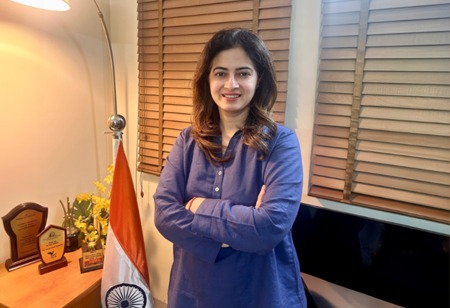
In an interaction with Adlin Pertishya Jebaraj, Correspondent at Finance Outlook, Shriya Teluja, Proprietor at FINMASS, shares her perspective on how Mutual Funds 2.0 is redefining distribution and advisory. She explains how digital access, AI-led personalization, and enhanced transparency are reshaping investor engagement—while emphasizing that trust and human relationships remain the foundation of long-term wealth advisory.
FINMASS, with a legacy of 28 years in wealth investment services, has evolved alongside the industry’s digital transformation. Under Shriya’s leadership, the firm has expanded its reach into smaller towns while continuing to deliver personalized, goal-oriented services tailored to diverse investor needs.
How do you define Mutual Funds 2.0, and what does it mean for today’s investors?
Mutual Funds 2.0 represents a structural shift from transaction-led distribution to experience-led investing. It reflects the integration of digital infrastructure, intelligent analytics, and investor-centric transparency into the mutual fund ecosystem.
Today’s investors benefit from seamless onboarding, paperless transactions, faster execution, and 24/7 access through digital platforms. More importantly, advisory has become data-driven. With analytics and AI tools, recommendations are now aligned more precisely with individual goals, time horizons, and risk appetite.
However, Mutual Funds 2.0 is not merely about digitization—it is about empowerment. Investors now have better visibility, improved reporting, and greater control over their financial decisions. The ecosystem is faster, smarter, and more accountable than ever before.
Also Read: Rebuilding CFO Stacks: AI and the Future of Finance
How has digital transformation improved access to mutual funds in smaller towns and emerging markets?
Digital transformation has significantly expanded market participation beyond metropolitan cities. Earlier, access barriers included physical documentation, limited distributor presence, and slower processing cycles. Today, e-KYC, online platforms, and mobile-first interfaces have removed these constraints.
As a result, investors from Tier-2 and Tier-3 towns can now open accounts, transact, track portfolios, and receive advisory without geographical limitations. This shift has accelerated financial inclusion and broadened participation in capital markets.
The outcome is not just convenience—it is structural democratization. Technology has enabled scale, allowing mutual funds to penetrate markets that were previously underserved.
In a tech-driven environment, how do you maintain the human touch in advisory?
While technology improves efficiency, it cannot replace judgment, empathy, and contextual understanding. Financial decisions are deeply personal and often influenced by life events, aspirations, and emotional responses to market volatility.
Maintaining the human touch means engaging in meaningful conversations, understanding long-term objectives, and providing reassurance during uncertain periods. It involves guiding investors toward disciplined investing and long-term thinking rather than short-term reactions.
A hybrid model works best—leveraging digital tools for execution and analytics, while preserving personalized engagement for strategy and decision-making. Trust remains the cornerstone of advisory, and that cannot be automated.
What new skills must mutual fund distributors develop to stay relevant in the Mutual Funds 2.0 era?
The role of a distributor is evolving from product intermediary to strategic financial partner. To remain relevant, professionals must build expertise in:
- Goal-based financial planning
- Digital platforms and analytics tools
- Regulatory awareness and compliance frameworks
- Risk profiling and asset allocation strategy
Beyond technical capability, soft skills are equally critical. Emotional intelligence, structured communication, and consultative engagement differentiate a transactional distributor from a long-term advisor.
The future belongs to professionals who can combine technological fluency with relationship-led advisory.
Also Read: Financial Resilience: Key to Wealth Creation in Volatile Times
How do you see the future of mutual fund distribution evolving over the next decade?
Over the next decade, mutual fund distribution will become increasingly hybrid, data-enabled, and client-centric. Technology will continue to streamline operations, offer predictive insights, and enhance transparency. Automation will improve efficiency—but complexity in markets will simultaneously increase demand for credible advisory.
Investors will seek partners who can interpret data within the context of their financial lives, rather than simply provide access to products.
The firms that succeed will be those that embrace digital transformation while reinforcing accountability, trust, and long-term partnership. Mutual Funds 2.0 is not about faster transactions—it is about smarter, more personalized, and relationship-driven wealth creation.