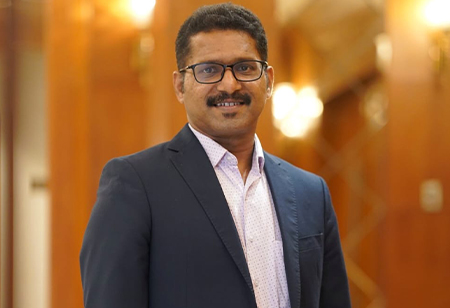
In an interaction with Adlin Pertishya Jebaraj, correspondent of Finance Outlook Magazine, Shinil Sebastian, Founder and Chief Consultant of Keralaspicesonline, shares how the long-term investments in capital-intensive projects are needed to create a program inclusive of the modern-day spice sector in Kerala (India), including precision farming and global brand development
Shinil Sebastian, a finance professional with over 4.5 years of experience in the finance industry and more than six years of teaching finance or accountancy at the tertiary level. He specializes in different types of financial services, including Security Analysis, Portfolio Management, Investment Management, Mutual Fund Operations, and Derivative Market Operations.
How do you evaluate the current demand and pricing outlook for premium, traceable spices from a financial growth perspective?
The global spice market is experiencing a remarkable trend of shifting to premium, traceable and sustainably sourced products, and this trend is mainly pushed by the consumers in the US, UK, Middle East and north India. Customers now require a touch of genuineness, purity and a high degree of origin identity. They are demanding pesticide-free, freshly-milled and single-sourced spices as well as spices that are produced transparently.
Market-wise, this change is strengthening the high end of the market, improving both value realization and financial predictability. Customers who shop in stores find it more comfortable to purchase products made in the source countries instead of purchasing indirectly, and this creates more trust and better price realization to the producers. On the same note, B2B customers such as gourmet food brands, wellness companies, and food-tech enterprises are focusing on high-quality spices and freshly processed spices to improve the quality of their product.
The international orders that have their origin in such regions as the US, UK, Japan, and the Netherlands are the indicators of this global tendency in our direct-to-consumer platforms. The increased readiness to pay a premium on traceable spices is a pointer to a maturing market with high value potential, and this puts India and especially the spice-producing regions as beneficiaries in the long term.
What scale of investment is needed to modernise the Kerala spices sector from farming to processing to branding for global expansion?
To modernize the spice value chain, such as traceability at the farm level up to a global brand, multi-stage investments that are capital-intensive are needed.
The importation of precision farming, soil testing laboratories, and electronic traceability systems is an essential investment at the farming level, and they assure quality conformity and marketability. The adoption of technology is a costly undertaking, particularly in assisting farmers who in most cases lack the technical expertise needed.
There is also a high capital requirement in the processing infrastructure. Cleaning, grading, steaming, grinding, and value-addition facilities should be of high-grade to comply with international food safety standards. Most farmers and small processors continue to embrace the traditional ways; thus, modernization is a prerequisite in their international competition.
More investments in e-commerce infrastructure, international certifications, logistics capability, and overseas warehousing are needed so as to venture into branding and international expansion. The warehouse plans in Canada, the UAE, and the UK show the necessity of rapid delivery and distribution on the local level.
On the whole, it will require 10 years and an investment of 80–100 crore in order to create a complete global brand, reflecting the long-term financial horizon needed for sustainable value creation.
Also Read: India's Roadmap to Mass Cryptocurrency Adoption
How could Kerala spice clusters attract more foreign investment to accelerate technology adoption and global reach?
To attract foreign investment, there should be a greater emphasis on positioning the spice clusters in India as high value and globally relevant ecosystems. The majority of legacy consumers can feel the distinctiveness of Indian spices, and younger generations are not always aware of it. Thus, it is necessary to enhance global marketing and branding by region.
There should be the strengthening of specialized spice parks, which are in line with the strengths of each region, with the help of a partnership with the government. Such clusters can assist the global investor to follow origin, quality and traceability standards easily.
Traceability is essential. Origin-certified spices that are geotagged receive an impressive appeal among investors who consider authenticity and sustainability very important. Investment interest will also thrive faster due to export-oriented incentives by the state and central governments.
The possibility of scalability has been proven by successful stories and digital-first brands that have penetrated over 40 markets across the globe. These ought to be presented in international roadshows of investors in locations such as Dubai and Singapore. Most foreign investors have the capital and they are aggressively searching in specialty agri-produce segments; an organized presence will hasten capital inflow into Indian spice clusters.
What frameworks do you use to evaluate financial risk across farming, procurement, processing, and export stages?
There are four fundamental areas of financial risk, namely, farming, procurement, processing and export markets.
Risks at the farming level are as a result of weather variability, crop diseases and contamination. Contract farming, quality protocol, farm audit, and digital traceability are all mitigation measures that minimize uncertainty and provide predictability of output.
The procurement risk is connected with changes in supply, demand spikes, and the power of the middlemen. Long-term relationships with suppliers and direct relations with farmers ensure stability and minimize the leakage of the margin.
Some of the risks that are associated with processing are machine failure, production delay, and failure of technology. The continuity of the operation and the minimization of the downtime are guaranteed by modern equipment, AI-based monitoring, certifications, and standard operating procedures.
The risks that are export-focused include the changes in regulation, the fluctuations of the currency, and the fluctuating freight costs. By diversifying into various global markets, the company will not be dependent on a single currency or region. Establishing foreign warehouses also reduces freight expenses surges and delivery delays.
These structures enable long-term profitability despite the volatility of the agri-commodities industry.
Also Read: Building Financial Discipline in India's Fast-Growing Media Industry
What is your long-term vision for Kerala spices and strategies to drive revenue, profitability, and ROI?
The long-term vision is to establish a brand that is recognized around the world and the Indian spices are considered a symbol of trust, purity, and quality. The goal will be to be on the shelf of every kitchen, be it in India, the US, or Europe with at least one premium Indian spice product.
This necessitates a seed-to-shelf business model, fewer intermediaries, higher farmer pay, and consumers obtaining transparent and origin-verified spices. Online growth, international warehousing, B2B relationships and direct-to-consumer initiatives are all going to help blister growth globally.
Major spending will be made on value-added products, freshly milled spices, spice blends, ready-to-cook packages, functional wellness products and high-quality gift boxes. These segments provide greater returns and repeat business, which reinforces ROI in the long term.
The growth plan is centered on the use of technology, supply chain optimization and diversification of product lines, coupled with robust digital distribution and expansion in the global market.